








New Premier League Rules 2026/27: What Has Changed?
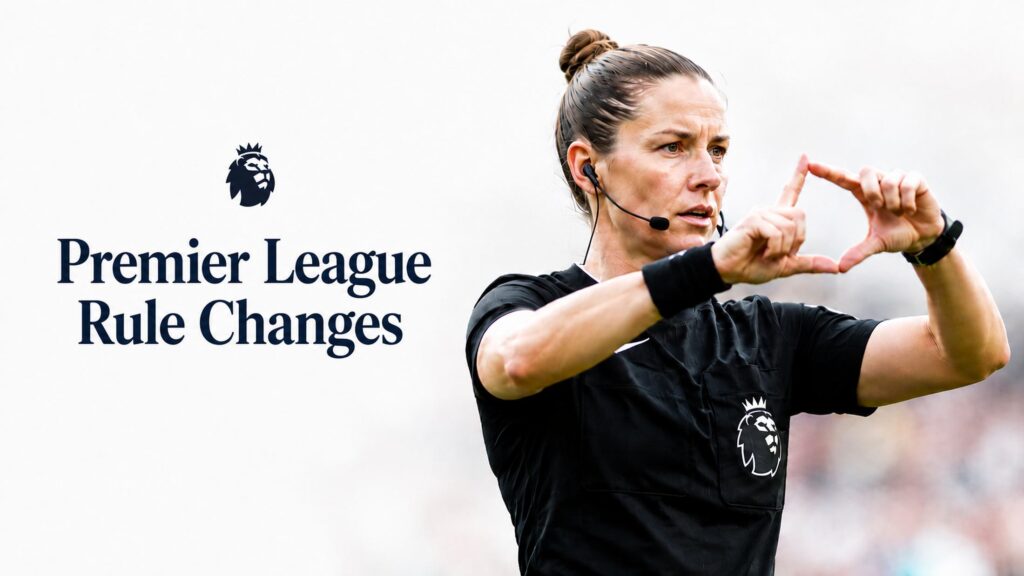
The Premier League is implementing several rule changes for 2026/27 aimed at reducing time-wasting and correcting major refereeing errors. From quicker substitutions to tougher sanctions at goal-kicks, these are the changes supporters need to know. Fans following the new season can also compare the best Premier League betting sites in the UK for the latest football betting options.
Premier League 2026/27 rules at a glance
| Change | New rule |
|---|---|
| Substitutions | Players have 10 seconds to leave the pitch |
| Goal-kick delays | A five-second countdown can lead to an opposition corner |
| Throw-in delays | A five-second countdown can result in possession being lost |
| VAR and second yellows | VAR can correct a clearly wrong second yellow that causes a sending-off |
| Injury treatment | Treated outfield players normally stay off for at least one minute after play restarts |
| Goalkeeper injury trial | A team must temporarily lose an outfield player when play stops for goalkeeper treatment |
*The key change is simple: wasting time can now directly cost possession, territory or even leave a team temporarily short-handed.
Players must leave quickly when substituted
Once a substitution is being made, the outgoing player has 10 seconds to leave the pitch. If they take too long, the replacement cannot immediately enter. They must wait until the first stoppage after one minute has elapsed.
That means a team trying to waste time could briefly find itself playing with ten men.
Goal kicks and throw ins face a five second countdown
Referees can now begin a visible five second countdown when they believe a player is clearly delaying a restart. The punishments are different:
- Slow throw-in: possession goes to the opposition.
- Slow goal kick: the opposition receive a corner.
The countdown does not automatically begin as soon as the ball goes out. It starts only when the referee believes there is unnecessary delay.
VAR can correct some second yellow decisions
VAR has a new but limited role with second yellow cards. If a referee shows a second yellow that sends a player off, VAR can intervene when the decision is clearly wrong. VAR still cannot search for a second yellow the referee failed to give.
VAR second-yellow rule
| Normal yellow card | No |
|---|---|
| Situation | VAR intervention |
| Incorrect second yellow causes red card | Yes |
| Referee misses possible second yellow | No |
| Possible straight red | Yes, as before |
Injury stoppages are also being tightened
An outfield player who receives treatment after play is stopped must normally stay off the pitch for at least one minute after play restarts. There is also a goalkeeper-injury trial. If play is stopped for goalkeeper treatment, the manager must nominate an outfield player to temporarily leave the pitch as well.
The aim is to reduce tactical injury stoppages.
What has not changed?
Several points are worth clarifying:
- VAR cannot review every yellow card.
- VAR cannot award a missed second yellow.
- VAR will not review wrongly awarded corners in the Premier League.
- Referees will continue to use a relatively high threshold before VAR intervenes.
Why could these rules matter?
Most of the changes target one problem: deliberate delays. Teams protecting a lead now face greater risk when slowing down substitutions, goal-kicks or throw-ins. At the same time, VAR has slightly more power to prevent an incorrect dismissal. The rules should not radically change every match, but they give referees stronger tools to punish obvious time-wasting.