
An Ashes Test can turn on one spell of bowling; a T20 chase can swing in a single over. At BetBrothers, you can compare cricket betting odds for upcoming matches where coverage is available, with live cricket odds shown for supported fixtures once play begins. Check the format, find your market and compare prices before placing a bet.
Our guide to the best cricket betting sites UK helps you explore your options, while this page explains cricket odds, popular markets and the competitions to follow.
Odds updated on October 23
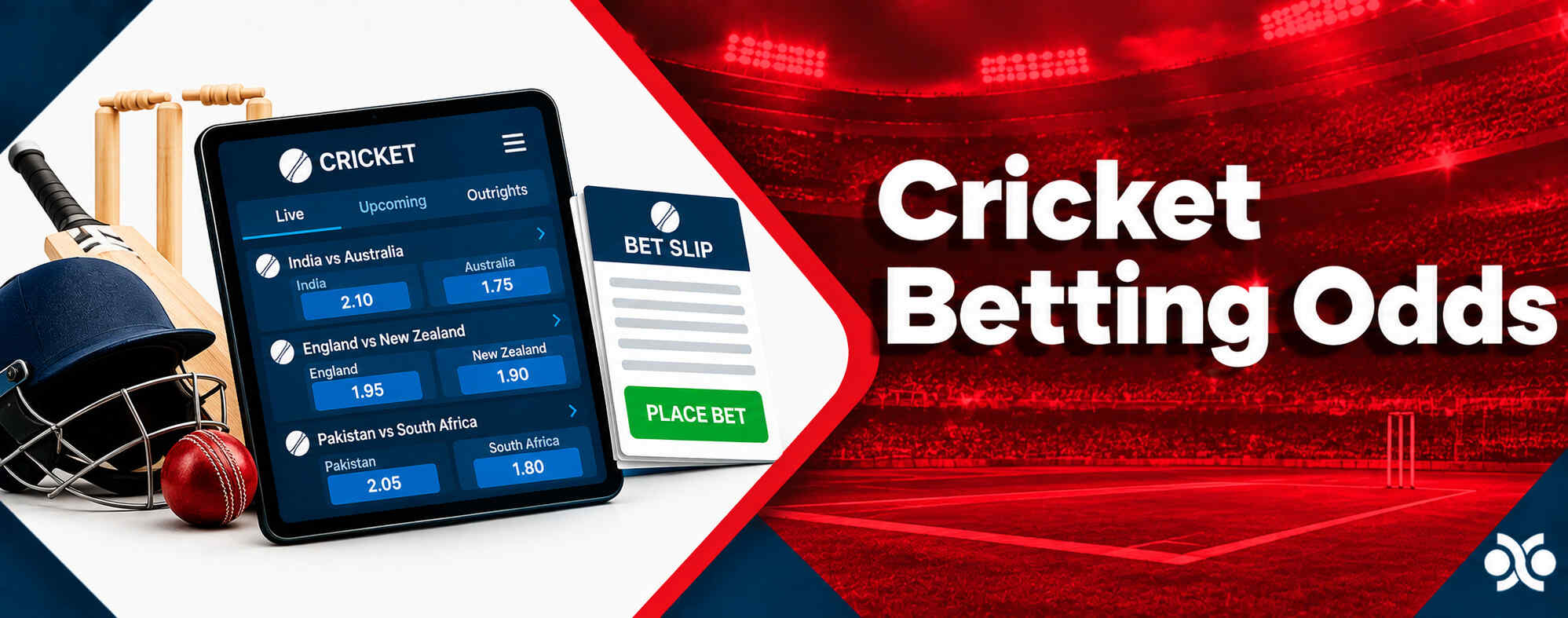
Cricket Odds Comparison
The BetBrothers Match Centre helps you compare cricket betting odds for upcoming matches where coverage is available. Check cricket odds today, compare the same markets and find the best cricket betting odds among the prices shown. Ready to compare online cricket betting odds? Choose your fixture to get started.
Cricket Betting Odds by Competition
Cricket’s calendar mixes international series, global tournaments and domestic leagues. These five competitions cover Test, ODI and T20 cricket, with match and outright markets available depending on the schedule and bookmaker coverage.
- The Ashes: England v Australia in a Test series. Compare individual Test result odds, including the draw where offered, and series-winner prices.
- ICC Men's Cricket World Cup: The international ODI tournament, played in the 50-over format. Look for individual match-winner odds and tournament-winner prices.
- Indian Premier League (IPL): India’s franchise T20 competition, featuring domestic and overseas players. Markets include match winners and the outright tournament winner where available.
- T20 Blast: The county T20 competition in England and Wales. Compare prices for individual matches and outright odds on the tournament winner.
- ICC Men's T20 World Cup: The international men’s 20-over tournament. Look for match-winner and outright winner odds, distinct from the ODI Cricket World Cup markets.
Cricket Match Odds and Popular Markets
Before comparing cricket match odds, decide exactly what you want to predict. Match results, team totals and player performances are separate markets, each with its own settlement conditions.
⭐ Test Match Odds: Win and Draw
Test result markets commonly offer three selections: either team to win or the match to end in a draw. Men’s Tests are scheduled over five days, with two innings per side, so the time available matters as well as the score.
A team can dominate without completing a win before time runs out. That is why the draw deserves attention, particularly when rain removes playing time. A tied Test is a different result from a draw; check the market’s specific tie rules.
⭐ ODI and T20 Match Winner Odds
ODIs are scheduled for 50 overs per side, while T20 matches are scheduled for 20. Match-winner markets generally focus on the two teams rather than including a Test-style draw selection.
Check whether the market includes a Super Over where one is used to break a tie. The competition’s official result and the bookmaker’s settlement conditions both matter, especially if rain shortens the match.
⭐ Team Runs and Player Markets
These markets let you focus on a particular innings or player instead of the overall winner. Common examples include:
- Team runs: Over or under a specified total for an innings or a defined number of overs.
- Player runs: Over or under an individual batter’s run line.
- Top batter: The leading run-scorer for a team or the match, as specified.
- Top bowler: Usually the leading wicket-taker within the stated team or match market; check any tie-break criteria.
For an illustrative team total of over 169.5 runs, the side must score at least 170 for the selection to win, provided the market’s settlement conditions are met. Check minimum-overs, player-participation and dead-heat rules before betting.
⭐ Tournament and Series Winner Odds
Outright markets cover the winner of an entire competition, such as the IPL or a World Cup. Series-winner odds cover a sequence of matches, such as the Ashes.
Winning an individual match does not necessarily mean winning the series. Also distinguish winning the Ashes series from retaining the Ashes: the holder can retain the trophy after a drawn series. Read the exact market name before comparing prices.
Live Cricket Odds
Live cricket odds respond to the match as it unfolds. During a chase, the runs required, balls remaining and wickets in hand all shape the price. A quick partnership can shorten the batting side’s odds; losing two established batters can reverse that move.
Prices can change between deliveries, not just at the end of an over. Markets may also pause during a review, a rain delay or a significant incident while the situation is assessed.
For supported fixtures, compare the displayed price with the current match position and its update time. Broadcasts and scorecards may be delayed, and a visible price is not guaranteed to remain available when you place your bet.
What Affects Cricket Odds?
The same two teams can be priced differently depending on the venue, format and available players. Before a match, consider:
- Team selection: A missing opening batter or frontline bowler can change the balance of a side.
- Pitch and ground: Surface conditions and boundary sizes can favour different styles of play.
- Weather: Rain can reduce playing time, while conditions may affect batting and bowling.
- The toss: Batting or bowling first can matter, depending on the conditions.
- Form and workload: Recent performances and recovery time help put a team’s prospects in context.
Once play starts, the score, wickets and remaining time or overs become central. Market activity can also move prices. Shorter odds reflect a higher implied probability, not a guaranteed result.
How to Read Cricket Betting Odds
Odds show the potential return on a winning bet and can be converted into an implied probability. Understanding both makes prices easier to compare without confusing the payout with the likelihood of success.
Fractional and Decimal Odds
Fractional odds show profit relative to your stake. Decimal odds show the total return per £1 staked, including the stake itself.
These examples use the same £10 stake:
| Fractional odds | Decimal equivalent | Profit if successful | Total return |
|---|---|---|---|
| 1/2 | 1.50 | £5 | £15 |
| 5/4 | 2.25 | £12.50 | £22.50 |
| 5/2 | 3.50 | £25 | £35 |
To convert fractions to decimals, divide the first number by the second and add one. For 5/2, that is 5 ÷ 2 + 1 = 3.50. These are explanatory examples rather than current prices.
Implied Probability and Bookmaker Margin
For fractional odds, divide the denominator by the sum of both numbers, then multiply by 100. At 5/2, the implied probability is 2 ÷ 7 × 100, or approximately 28.6%. With decimal odds, use 1 ÷ decimal odds × 100.
Bookmaker prices typically include a margin. In a hypothetical two-outcome market with both sides priced at 10/11, each has an implied probability of around 52.4%. Together they total about 104.8%, giving an overround of roughly 4.8 percentage points.
That excess over 100% represents the market’s pricing margin, not a guaranteed bookmaker profit or an independent estimate of each team’s true chance.
Odds Sources and Updates
Check the source and last-update time alongside each displayed price. These details help you see where the quote comes from and how recently it was supplied. Coverage may differ between competitions, fixtures and markets.
Prices and market availability can change before your bet is accepted. Confirm the current odds and bookmaker terms, particularly for ties, draws, reduced matches and no results. A completed match does not automatically mean every player or team-total market remains valid.


FAQ. Frequently Asked Questions
How can I compare cricket odds for the same match?
Choose the same fixture, market and selection across the available prices. Check that the settlement rules match, including treatment of ties and interrupted play. Then compare the odds and confirm the final price on your bet slip.
How do Test match odds differ from ODI and T20 odds?
Test result markets commonly include either team to win and a draw. ODI and T20 match-winner markets generally focus on the two teams. Check whether tie-break procedures, such as a Super Over, count towards settlement.
Why do live cricket odds change after each over?
Each over changes the runs required, deliveries remaining and possibly wickets in hand. Prices reflect that new situation and can move after individual balls, too. They do not have to change after every over.
What is the difference between a draw, a tie and a no result?
A Test draw occurs when play ends without a win or tie. A tie means the completed innings finish with equal scores, subject to the competition’s playing conditions and any tie-break. A no result usually means a limited-overs match cannot produce a result because insufficient play is possible.
How can rain or a shortened match affect a cricket bet?
Rain can remove overs, trigger a revised target under the Duckworth–Lewis–Stern method or prevent a result. Some markets may stand while others are void, depending on their rules. Check the bookmaker’s minimum-overs requirements and interrupted-match conditions.
Do the displayed odds guarantee the price I will receive?
No. Comparison prices are snapshots and can move before the bookmaker accepts your bet. Check the odds shown on the final bet slip and the accepted bet confirmation rather than relying on an earlier quote.
Author

Andreas Vou Sports Journalist
British-born, Cypriot-raised football writer with a focus on LaLiga and the wider European game. He has worked as a correspondent for beIN Sports USA, contributed features and opinion pieces to multiple publications, and held editorial roles with FC Barcelona’s official website and MARCA’s English-language edition. Now Editor-in-Chief at BB Sport News, covering European and international football.
Article rating
4.7/5
3 votes